

Today we will explore the many offspring of Adam and Eve. This Bible account takes us through several generations on down to Noah. It is a whirlwind tour, but interesting, nevertheless. We will see that, at one time, people lived longer and had many, many children. The earth’s population grew with great speed. As did sin.
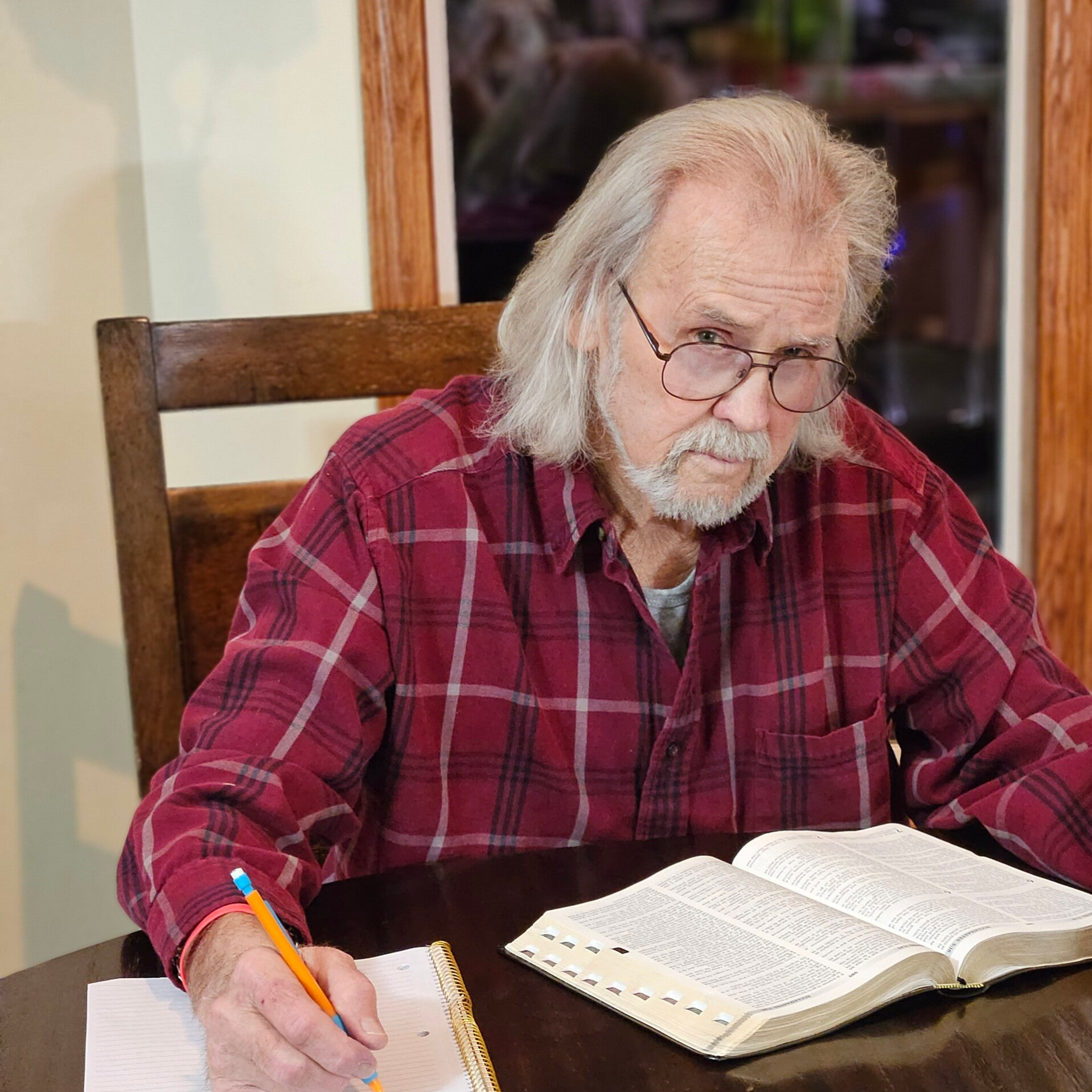
When we left Cain previously, he had just moved to the land of Nod, east of Eden. We will pick up today in 4:17, where we find him married with a new child, Enoch. There, in the land of Nod, he built a city which he named after his son, Enoch (Psalm 49:10-11). Verse 18 tells us of several more generations born to Cain’s line. I want you to sketch out a family tree from Adam to Noah, in your journal, as we study today. Start here with the information we have so far in verse 18.
d
'In verse 19 we meet Lamech. Add him to your tree. How many generations down from Adam is Lamech? In the Bible, the number 6 is consistently representative of human weakness and the manifestation of sin. We see immediately that Cain’s sinful ways have passed down through the generations and are present in Lamech’s nature. What sin of Lamech do we learn of here in verse 19? Yes, we see the first recorded example of Satan’s success in marring the sanctity of the marriage relationship - polygamy. This distorting of marriage is one of Satan’s most common goals. Remember, the marriage relationship is representative of the relationship between Christ and the church (the redeemed of God). As the husband, Lamech can still represent Christ in the marriage, but two women cannot really represent Christ’s church. Add Lamech’s wives to the family tree you are sketching.
Using verses 20-22, add Lamech’s offspring to the tree. Notice in these verses, new occupations were still being created in the world by these men, instructing others in the trades. Verses 23-24 tell us of what Lamech said to his wives. What other sin of Lamech is revealed here in Lamech’s words (Exodus 20:13, Leviticus 19:18)? Lamech has killed a man, just as his ancestor Cain had. It is very important to remember in life that our values are picked up by our offspring and passed down from generation to generation. That is one of the reasons we must live pure and godly lives and set an example for our children.
Notice in verse 24 that Lamech even brags of his sin. If Cain’s murder was to be avenged seven times, then anyone who killed Lamech was to be avenged 77 times. Lamech certainly had a sense of his own importance as we see his sin of pride revealed here. Lamech was not a man of God.
Verses 25-26 add to the family tree. Record these additions on the tree you are building. Notice what we are told in the second half of verse 26. What is the Bible actually telling us here (Joel 2:32, Acts 2:21)? While Cain’s line of the family was creating a legacy of honoring sin, God had provided another son, Seth, whose line would replace Abel’s legacy of honoring God. Notice, as we go forward, that it will be Seth’s line which brings us to Noah.
Genesis chapter 5 brings us more information about the generations from Adam to Noah. Verse 1 reminds us that mankind was created in the image of God… we are spiritual beings. This is very important to God (Ephesians 4:24). Verse 2 reminds us that they were created male and female and that God blessed them… they will be able to produce new people just as God had been able to create them. And we are reminded that they were named mankind… a one-flesh name (Matthew 19:4-6). Notice something interesting about Seth in verse 3. He looked like Adam. The Bible tells us he was in Adam’s own image just as Adam had been in God’s own image. Here we see Seth’s physical resemblance used to reflect Adam’s spiritual resemblance. We will see many times in the Bible where God is described as our Heavenly Father. This is another example of Adam illustrating the relationship between God and man (I Corinthians 15:47-49) and establishes the genealogy all the way from God to Noah. If you follow Biblical genealogies far enough, you will see this lineage from God all the way to Christ’s birth (Matthew 1).
Using verses 4-23, add to the family tree you are constructing. Next to each name, record the age at which each person died.
Notice that Enoch’s life was significantly shorter. Verse 24 gives us the reason. First, it tells us that Enoch walked with God. Enoch was a man of faith (Hebrews 11:5-6). How long did Enoch walk with God? Second, it tells us that he was gone because God took him away. Thus, we see here that Enoch never died. There is only one other person in the Bible who did not die and that was Elijah (2 Kings 2:1-12). Both great men of God, they were taken to Heaven without seeing death.
Many theologians believe that, because they did not see death, they can still return to the earth to be used by God. Some believe that Elijah returned as John the Baptist (Matthew 17:1-11). Others believe that Enoch and Elijah will be the two witnesses sent by God during the Great Tribulation in the end times (Revelation 11:1-6). And yet another theory suggests that these men may foreshadow the Christians who will be caught up in the Rapture during the end times (I Thessalonians 4:17). There is really no explanation given in God’s Word as to why these two men were taken from the earth without dying except that they were men of great faith.
Using verses 25-32, add to the family tree you are constructing. Next to each name, record the age at which each person died. Now let’s glean some facts from the tree we have drawn. Before the flood people lived longer. Who was the man who lived to be the oldest ever? This is where we get the expression, “he’s as old as Methuselah”. Methuselah was a contemporary of both Adam and Noah’s son Shem, making him a connection between the first people in creation and the first people after the flood. What role could he have played in passing down the Biblical accounts of creation? Of course, he would have died in the flood along with his contemporaries. How many generations down from Adam was Noah?
Just as the Bible records six generations in the lineage which loved sin, it records ten generations in the lineage which loved God. In researching the meaning of the number 10 in Biblical numerology, I have found multiple meanings offered. That being said, they have all had to do with obeying God’s Law, or pertaining to a legal system, or something of that nature. We see here in the genealogy between Adam and Noah that Cain’s lineage, consistent with Biblical numerology, was the sinful lineage and that Seth’s lineage, consistent with Biblical numerology, was the God-obeying lineage. The world is pretty much made up of these two types of people today. Read what Jesus had to say about this issue in Matthew 12:30. Through which line do you think Jesus traces His birth?
In verse 29 we see a reference to the fact that Noah’s name sounded like the Hebrew word for “comfort” and a reference to God’s punishment on Adam for his sin in the Garden of Eden. This story had undoubtedly been passed from generation to generation. Notice also, in verse 32, how old Noah was when he began having children. And these children were grown and married at the time of the flood (Genesis 7:7). Noah would have known many of his ancestors.
Responding to God: Praise God today for the consistency of His Word and for His love in sharing it with us. Thank Him for allowing us the understanding to learn from it. Commit today to protect the sanctity of your marriage so that it can honor God in its symbolism of Him. Commit to creating a legacy for your children and their children by setting a godly example before them in your attitudes and behaviors. Ask God, in prayer, to help you examine your heart as to whether your life is devoted to the love of sin or the love of God. Are you for Him or against Him? Ask Him to help you become a person of great faith like Enoch and Elijah.
Further Research: If you would like to learn more about Elijah, read I Kings 17-2 Kings 2.
Add comment
Comments